
This training has sold out.
●
Tap "Register Now" below to be added to the waiting list.
●
This training has sold out. ● Tap "Register Now" below to be added to the waiting list. ●
TRAINING INTENSIVE · JUNE 4–7, 2026 · HEARTEN HOUSE × PAPI
Integrative, Relational Practice in IFS, Psychodrama, and LeadershipBring it to life
21 CE + Psychodrama Training Hours · Limited Capacity · Early Registration Discount until May 10
Your notes are due. You open your phone and start scrolling.
There’s conflict in the office because someone isn’t pulling their weight, but you quietly absorb the extra work because it feels easier than seeming demanding. The meeting where upper management held you accountable and something in you immediately looked for someone else to blame. The version of you that says yes to everything because being seen feels essential, and no feels dangerous.
You already know these aren’t character flaws. You might even have a name for them. In the therapy world we often call them parts. Your peacekeeper part. The part of you who feels like a 12-year-old getting in trouble and wants to shout “It wasn’t me!” to avoid embarrassment, even when you know what’s yours to own. The part of you that needs recognition and appreciation. The part of you who associates performance with acceptance.
You know they’re there. You might even have named each one and visualized them in your mind. You could probably write a clear case conceptualization of the why and how. But they keep showing up, and no amount of using your clinical training to explain them to yourself or anybody else is helping the reactions change.
The problem was never that you didn’t understand them. The problem is that naming them wasn’t supposed to be the finish line.
“Psychodrama is an embodied method, so it can be difficult to explain. It has to be felt, and it’s easier to experience it than to try to conceptualize it. When people who have awareness of IFS meet Psychodrama for the first time, they say ‘Psychodrama seems a lot like IFS, but brought to life.’ That observation makes a lot of sense, and that’s what we want to teach them how to do.”
-Aimee Hadfield
bring it to life
This is a four-day training intensive built on a simple observation: most people who’ve found IFS know how to name what’s happening inside. Few know how to move it. And fewer still have had the experience of watching it move in real time, in a room, with other people who are doing the same thing.
Psychodrama gives your parts a body, a voice that doesn’t have to be translated, and a room where they can meet the roles they were formed in response to.
Because your avoidant part didn’t develop in isolation. It developed in response to something. Someone. A system that needed something from you that you learned to provide, at a cost you’re still paying.
Psychodrama is, in many ways, the original parts work. Long before parts language entered the therapy world, psychodrama was mapping the intrapsychic roles we carry. The peacekeeper. The one who overworks to be seen. The part that keeps the boat steady at its own expense. And it was doing something IFS alone can’t do: putting those roles in relationship with each other. In the room. In action. In real time.

This training is for anyone who leads. Which is most of us, in more contexts than we tend to count. You lead a clinical group or a therapy session. You lead a team, a department, a family meeting that nobody officially called a meeting. You lead yourself through a day that keeps asking things of you.
How your parts show up in those moments, and what becomes possible when you can see them, own them, and work with them rather than be run by them, is the thread that runs through everything we’ll do together.
You’ll leave with skills you can put to use on Monday morning whether you’re heading into a clinical session or a board meeting, and those skills will come from a deeper understanding of yourself and the people around you. The confident parts will feel more ready, and the parts that have been getting in the way will know where they stand and what their jobs are.
Each experiential sequence is followed by time to share what it was like to be in it as a human, and then the learning part: the whys, the hows, the “what the...?” moments, other ways it could have gone, and where else you might use it. Nothing leaves the room unexamined.
this training is for you if:

You’ve been doing the work on yourself long enough to know the vocabulary, but something keeps not changing.
You use IFS in your clinical work and keep bumping up against the edges of what language alone can do.
You’ve been in a meeting, a session, or a hard conversation and watched a part of you take over, and you didn’t know how to interrupt it in real time.
You’re a clinician who wants to understand yourself as well as you feel like you understand your clients.
You facilitate group work, or want to, and you know the group takes its cues from you in ways you can’t always see.
You’re in healthcare or behavioral health leadership and you bring a clinical background to the work of building systems and leading people.
You’re tired of insight that doesn’t move.
A note about scope: this training teaches experiential methods for clinical and leadership application. It’s designed for people with existing clinical training and context. The work is powerful, and we want to ensure participants can hold it ethically and responsibly.
Schedule
Thursday, June 4
3:00 - 7:30pm
Friday, June 5
9am - 5:30pm
Saturday, June 6
9am - 5:30pm
Sunday, June 7
9am - 1:00pm
CE rules require sign-in and sign-out each day, and there is no partial attendance option for this training. Please plan to be present for all four days. Of course, arrangements can be made for unforeseen events that happen during the training.
What to bring
Snacks, water, sparkling water, coffee, tea, and other beverages are provided each day. We are happy to plan ahead for dietary needs if you let us know in advance.
We’ll break for lunch Friday and Saturday, and there are cafes and restaurants nearby. If you prefer to bring your own lunch, we have fridges and microwaves
Dress comfortably, and bring any comfort or note-taking supplies you may need. Reusable water bottles are also helpful. We have plenty to share if you forget.
getting here
Hearten House is about 20 minutes from the SLC Airport, and easily accessible by public transit, including TRAX light rail straight from the airport station.
Salt Lake City has a range of hotel and short-term rental options within walking distance, and our community members are happy to help with ride coordination and carpools.
We have free parking in our lot, and our building is fully ADA accessible.
Learn more about our space here.
What you’ll leave with:
This training is designed so that what you learn, you learn in your body, not just your notes. The skills don't need to be translated into practice after the fact. They're built in the room, tested in the room, and processed in the room before you go home.
• A working framework for IFS and psychodrama as integrated practice, not parallel tracks
• Clinical techniques you can use immediately with individuals, couples, and groups
• An embodied understanding of Self-led facilitation, what it feels like from the inside and what it looks like from the outside
• A clearer picture of your own role system as it operates in your clinical and leadership practice
• Language for the relational origins of parts and roles that you can bring directly into your work
• 21 CE hours and documentation for psychodrama certification toward CP
Utah LCSW, CMHC, LMFT, and associates: We’ve got you covered.Continuing Education (CE) Credits + training hours
Hearten House has been approved by NBCC as an Approved Continuing Education Provider, ACEP No. 7754. Programs that do not qualify for NBCC credit are clearly identified. Hearten House is solely responsible for all aspects of the programs.
Psychodrama training hours: this training offers 21 experiential training hours required for Certified Practitioner (CP) certification through the American Board of Examiners in Psychodrama, Sociometry, and Group Psychotherapy. These hours are PAT training hours, which the ABE limits to 160 of your total training hours. Documentation of hours will be provided to all participants upon completion, and psychodrama training hours do not expire.
Utah LCSW, CMHC, LMFT, and associate licensees, we’ve got you covered. NBCC accreditation guidelines exceed Utah DOPL CE requirements. For other states: This training offers 21 CE hours approved by NBCC. NBCC-approved CE is accepted in most U.S. states; check with your state licensing board to confirm.
Learning objectivesParticipants who complete this training will be able to:
1. Describe the conceptual relationship between IFS parts theory and psychodrama’s intrapsychic role theory as complementary frameworks for understanding the internal world.
2. Identify the relational origins of parts and roles as they present in clinical and group settings.
3. Distinguish between identifying a part and working a part, and identify at least two action-based techniques for facilitating movement rather than identification alone.
4. Apply core psychodrama techniques, including role reversal and doubling, within an IFS-informed framework to facilitate access to and communication between parts.
Registration fees

Early Registration (Before May 10, 2026)
$695
Regular Registration (After May 10, 2026)
$895
Associate-level Clinicians
$595
Graduate-level Students
$495
Cost shouldn't be the reason you're not in the room.
If cost is the only barrier keeping you from this training, please reach out before you talk yourself out of it. Assistance may be available. We mean that.
Email training@heartenhouse.com or call/text 801-410-0760 and we’ll have a transparent conversation.
Meet the trainers

Aimee is the founder of Hearten House, an experiential outpatient mental health treatment center in Salt Lake City, and one of three board-certified psychodramatists in Utah. She holds licensure in Utah, New Mexico, and Montana, and has spent years training clinicians nationally in how to bring psychodrama, sociometry, and group psychotherapy into integrated practice with other models and methods.
She's known for making experiential work feel immediately usable, and for training rooms where something actually moves. She's a three-time City Weekly Best of Utah winner in both the Best Psychotherapist/Counselor and Best Experiential Therapist categories.
Aimee Hadfield, LCSW, CP, PAT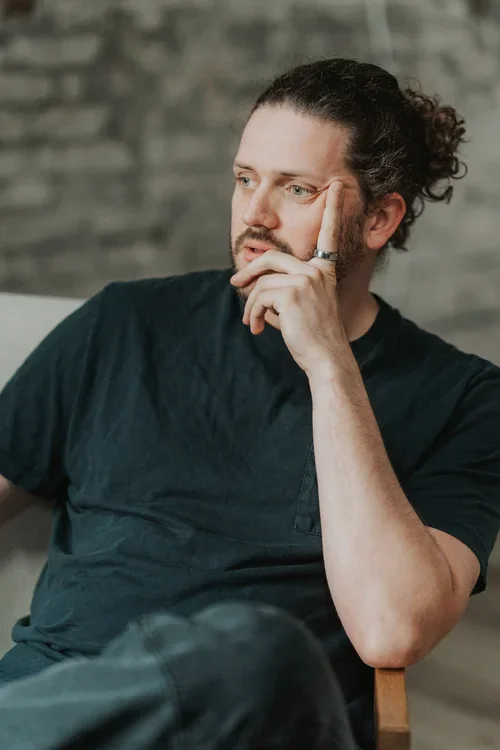
Haydn is the co-founder of the Philadelphia Area Psychodrama Institute and Stillpoint Intensives. He is an adjunct professor at Bryn Mawr College Graduate School of Social Work and Social Research, a doctoral candidate at the University of Pennsylvania, and holds licensure in Pennsylvania and New Jersey. His peer-reviewed research demonstrates the effectiveness of psychodrama group psychotherapy in reducing PTSD and depression, with published findings showing an average 45% decrease in PTSD symptoms and 69% decrease in depression.
He's known for making psychodrama accessible and alive for a new generation of clinicians, and for a grounded, no-nonsense presence in the training room.
Haydn Briggs, LCSW, CGP, CP, PATReady to sign up?
$200 off for early registration ends May 10, 2026. After that, regular registration is $895. Capacity is limited. If you've been waiting for this, this is the moment.
Frequently Asked Questions
-
Hearten House is an NBCC Approved Continuing Education Provider (ACEP No. 7754). This training offers 21 CE hours in live, in-person format. NBCC-approved CE is accepted by Utah DOPL for all mental health licensures and by most state licensing boards nationally. CE documentation is provided to all participants upon completion.
-
Utah LCSW, CMHC, LMFT, and associate licensees, you’re covered. NBCC accreditation guidelines exceed Utah DOPL CE requirements under Utah Administrative Code R156-60-105, so these 21 hours apply toward your renewal without any additional verification needed. For other states, NBCC-approved CE is accepted in most U.S. states. We’re not able to verify CE eligibility for other states, but your state licensing board is the best source to confirm whether NBCC-approved CE hours are accepted for your specific license type.
-
This training offers 21 experiential training hours applicable toward Certified Practitioner (CP) certification through the American Board of Examiners in Psychodrama, Sociometry, and Group Psychotherapy. These count as PAT training hours, which the ABE limits to 160 of your total required training hours. Documentation is provided to all participants upon completion. Psychodrama training hours do not expire. For full certification requirements, visit psychodramacertification.org or email training@heartenhouse.com.
-
No prior experience with IFS or psychodrama is required. The integration is built from the ground up, so you won't be lost without prior training in either model. What matters is that you bring a clinical background and context for the work. If you work with, lead, supervise, or support people in a behavioral health setting, you have what you need to be here.
-
Yes, if you have a clinical background and work with, lead, or support people in behavioral health contexts. This training is not limited to licensed mental health clinicians. Healthcare providers who work with behavioral health populations, lead clinical teams, or have genuine clinical training and context are welcome. The relevant qualifier is clinical background, not a specific license type. If you’re unsure whether this is the right fit, email training@heartenhouse.com and we’ll have a straightforward conversation about it.
-
Hearten House is located at 350 S 400 E, Suite 300, on the third floor of the historic Oquirrh School in downtown Salt Lake City. The building is fully ADA accessible with elevator access to the third floor. There's a free parking lot on site. Coffee shops and restaurants are within a block, with more options a short walk away. The Library Square TRAX light rail station is 2.5 blocks away, and Salt Lake International Airport is about 20 minutes by car.
-
Your registration includes all 21 training hours, CE documentation, and snacks, water, sparkling water, and beverages each day. Participants are responsible for their own meals and accommodations. You won't be far from good options.
-
If cost is the only thing keeping you out of the room, reach out before you talk yourself out of it. Once the core costs of running this training are covered, we'd rather have people in seats than leave them empty. Assistance may be available. Email training@heartenhouse.com or call/text 801-410-0760 and we'll have an honest conversation.
-
Absolutely. Nearly all of our training intensives have participants from other parts of the country. Salt Lake City is about 20 minutes from Salt Lake International Airport (SLC), with direct flights from most major cities. Hotel and short-term rental options are available close to the building, and the TRAX light rail connects the airport to downtown.
-
-
Email training@heartenhouse.com or call/text 801-410-0760. We'd rather you ask than wonder.