JOIN THE HEARTEN HOUSE TEAM
CLINICIAN POSITIONS · GRADUATE INTERNSHIPS · SALT LAKE CITY
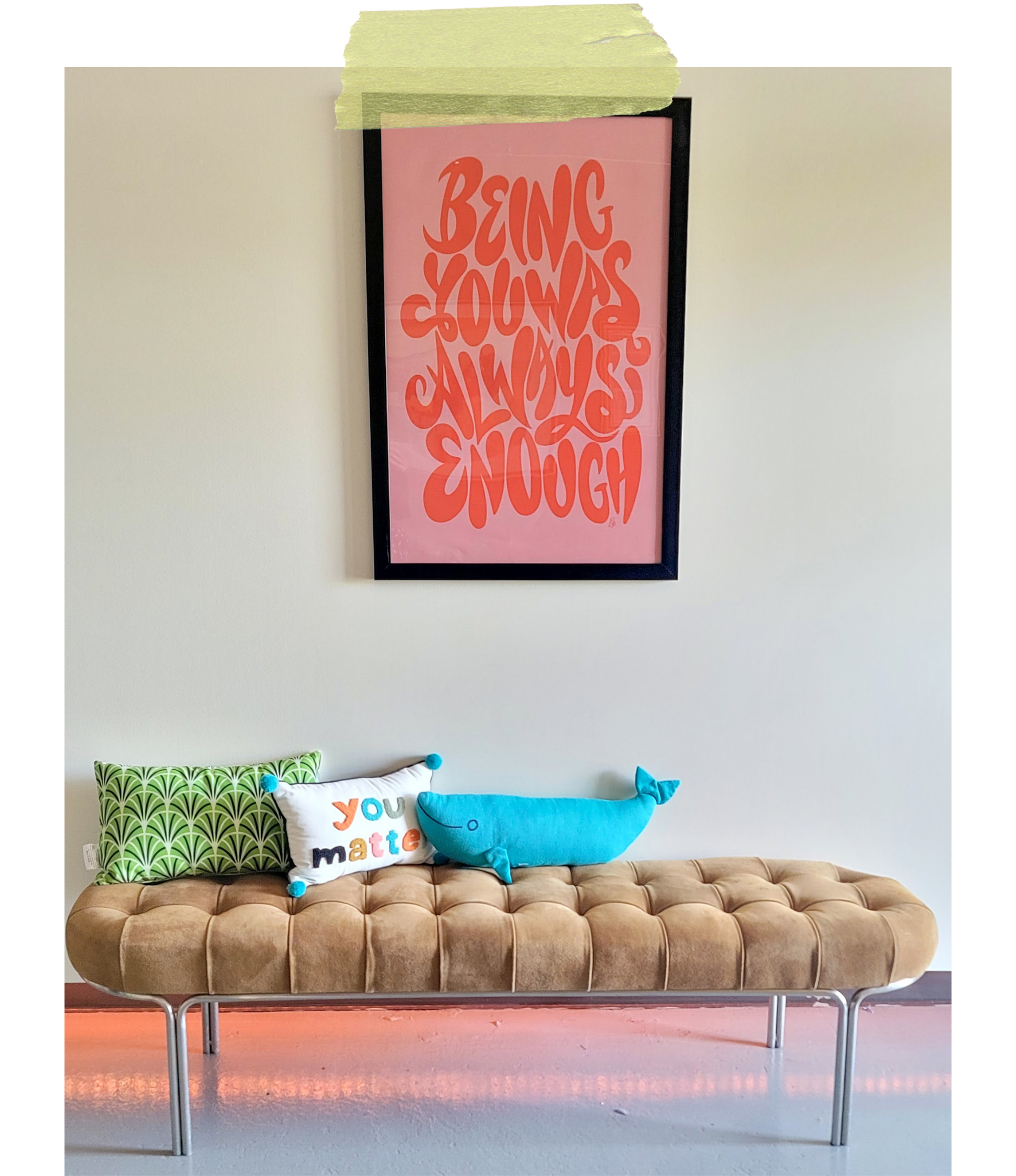
You already know what it's like to be in a room where something real is happening. Where the work goes past the surface and actually moves something. You've probably also been in rooms where it doesn't, and you know the difference.
Hearten House is built for the former. We're an experiential, embodied, trauma-informed outpatient mental health treatment center in downtown Salt Lake City. Psychodrama is our primary clinical model. The work here happens through action, movement, creative expression, and group process, not just conversation. If that's the kind of place you've been looking for, we'd like to hear from you.
The setting you work in shapes the kind of clinician you become. We think that's worth being intentional about.Learn more and follow along on Instagram or Facebook:
Part-Time Clinicians
We're interviewing part-time clinicians at both the provisional and full licensure level. Provisional licensure is welcome: CSW, ACMHC, and AMFT candidates who are seeking a supervisory environment that will deepen their experiential practice alongside their licensure hours.
What working at Hearten House looks like: you carry a clinical caseload, participate in group co-facilitation, and work within a team that is genuinely collaborative. Supervision is robust and goes well beyond the required minimum. Clinical conversation doesn't stay confined to formal supervision slots. The team is small enough that everyone knows the work everyone else is doing, and that collective knowledge shapes what's possible in the room.
Psychodrama and experiential therapy training is provided, and compensation is commensurate with experience and licensure level. We'll talk through specifics when we connect.
Graduate Student Internships and Practicum Experiences
We're currently accepting applications from MSW and CMHC graduate students at all levels. Internships and practicum placements at Hearten House are genuinely different from most field placements. You're part of the work from day one, not watching from the sidelines.
Full details about the internship and practicum program, including what to expect, what we're looking for, and how to apply, are on the internships and practicum page.
Hearten House has partnered with students from Utah State University · Boise State University · University of Oklahoma · University of Kentucky · University of the Cumberlands · University of Denver · Marshall University and we are happy to arrange a partnership with your school.
What this place is
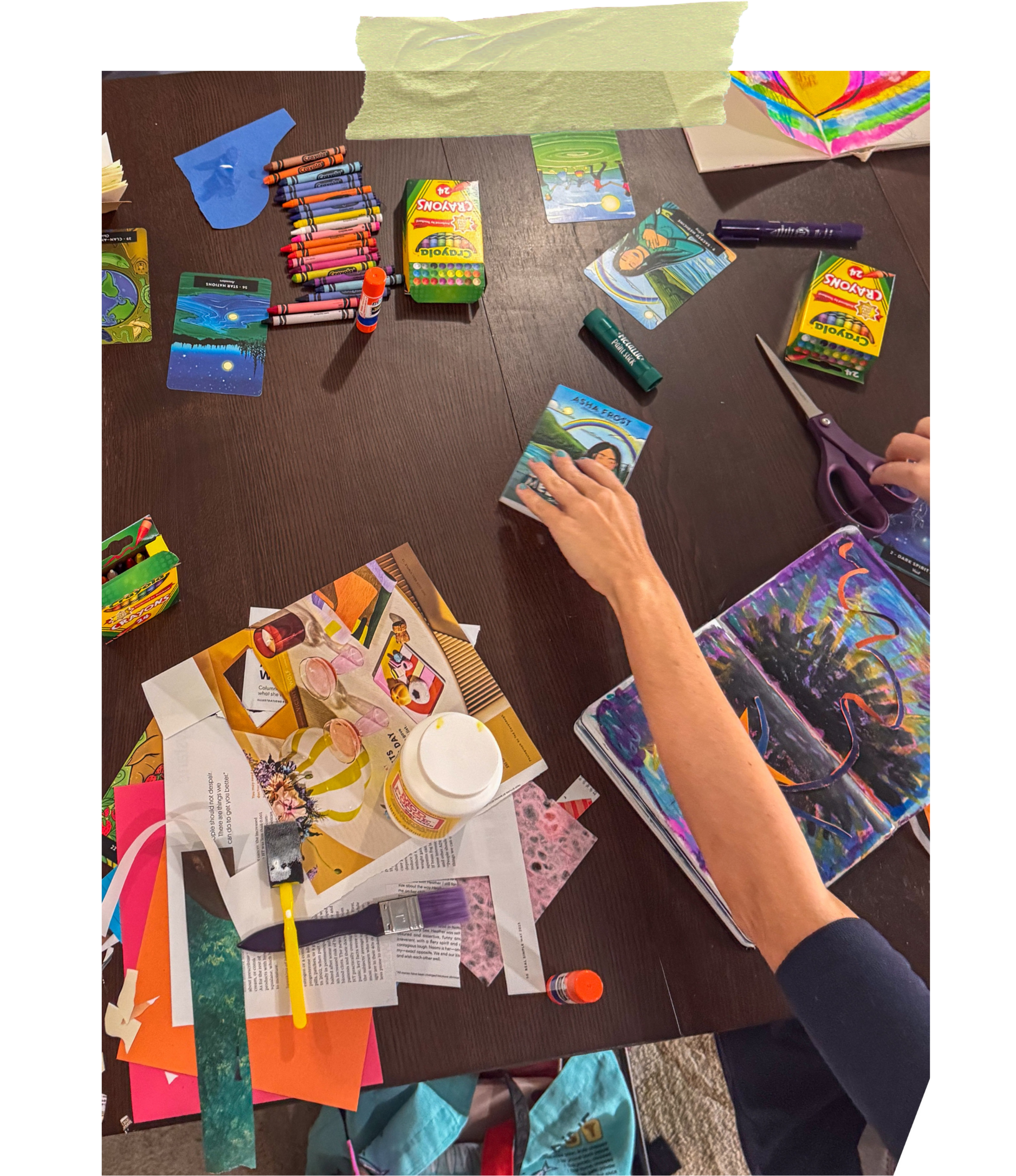
We don't hire people to work here. We recognize people who already feel like they belong here. And then we make it official.
It's four o'clock on a Sunday afternoon. One member of the team stopped by to work on a project and brought their kids. Another came by with friends after a day of climbing, wanting to show them the space. Nobody asked them to be there. Nobody will know if they weren't. They just wanted to be.
That is not something we engineered. It is something that happened because of who this team is and how this place was built. And it is, as much as anything else, what we are trying to protect as we grow.
Hearten House was founded by Aimee Hadfield, but it doesn't belong to her. It belongs to the people who show up for it, who receive inspiration and vision for it, who are as invested in building it as they are in the work it holds. That is not a values statement. It is a description of what is actually happening here on a Sunday in March.
What We Know About Clinicians
Aimee has spent over a thousand hours in group with other therapists through her psychodrama training and supervision. She spent years running a coworking space for wellness professionals before Hearten House became what it is today. She understands the interior life of a clinician, what you carry, what you need, what you're actually asking for when you say you want to work somewhere good, in a way that most employers genuinely don't.
Here is something she has learned: a lot of clinicians think they want to own a private practice. Some do. But a lot of people who end up in solo private practice are really looking for something else entirely: autonomy, excellent supervision, colleagues they respect, and work that feels alive. They go into private practice because they don't want to work somewhere that treats them like staff. Not because they want to run a small business alone.
Several people on the current team closed or chose not to open a private practice to join Hearten House instead. Not because they were talked into it. Because when they got here, they realized this was actually what they'd been looking for.
How the team actually forms:
Nobody on the current team arrived through a standard application process. Some came through trainings and knew by the end of the day they wanted to be closer to this work. Some came through referrals, or shared organizations, or friends who were already here. Some rented space and ended up staying. Some sent emails so specific and so clearly themselves that the relationship started right there on the page. Some came for a tour that wasn't supposed to be an interview and said, at the end of it, 'So do you want to interview me?'
The form is different every time. What's consistent is that by the time the long conversation happens, both sides already have a real sense of each other. The formal part almost comes last.
There's a running bit on the team about how everyone 'came in and talked to Aimee for like two hours and then I was just here.' Sometimes it's three hours. Sometimes it's ten. The number changes depending on who's telling the story and how much they want to make everyone laugh. But the phenomenon is real. The long conversation is how we figure out fit, on both sides. It's not an interview in the traditional sense. It's a recognition.
People don't show up on Sunday afternoons for organizations that treat them like staff. They show up for places that feel like theirs.
Who we are looking for
It’s not about a credential. Not a specialty, though both matter. Who we're looking for (and who is looking for us) is harder to name and easier to recognize.
You're genuinely drawn to experiential and embodied approaches, not just open to them. The work that happens through action, movement, creative expression, and group process feels like something you want to be part of your clinical identity, not something you'll get around to someday.
You want to be part of something, not just employed by it. You're interested in a team, in group co-facilitation, in the kind of clinical conversation that happens over lunch and between groups, not just in a solo caseload you carry alone.
You're honest. With participants, with colleagues, with yourself about what you know and what you don't. Hearten House is a place where people name things, including things that are hard to name, and that only works if everyone is willing to do it.
You can receive feedback and give it. The clinical model here is relational and experiential. That applies to how the team operates, too.
And maybe most importantly: when you found out Hearten House existed, something in you went, yes. Maybe you can't fully explain why. But you knew.
A relationship is the most direct path
If you want to understand whether Hearten House is right for you, the fastest way is to come to something. Our professional trainings and CE workshops are open to any clinician, and they are genuinely good on their own terms. They are also, consistently, where people find out whether this work is for them and where we find out whether they're for us.
Several people on the current team attended a training, experienced something significant shift by the end of it, and were asking how they could be more involved before they left the room. The training is not a prerequisite we require. It is just the most reliable door.
Other ways to spend time with us: Consultation groups and peer practice. We run these periodically. Following us and reaching out is the best way to hear about them when they come up.
Internship or practicum. Graduate students who complete a placement here and go on to get licensed are often a natural fit for clinical positions. Several current team member, including those in leadership roles, started as interns.
how to let us know you’re Interested:
If you're a provisionally or fully licensed clinician who feels a genuine pull toward this place, and especially if you've trained with us, attended a consultation group, or participated in one of our immersive experiences, we'd like to hear from you.
Send a resume and a cover letter to team@heartenhouse.com. In your cover letter, tell us about your existing connection to Hearten House if you have one, what draws you to experiential and embodied clinical work, and what you're looking for in a clinical home. There's no perfect format. We're just trying to get a sense of who you are and where you're coming from.
We read everything we receive and respond to everyone who sends materials. We may not have an immediate opening, but we keep expressions of interest on file and reach out when something becomes available that seems like a fit.
And if you've read this far and something in you is saying yes: that's worth paying attention to.
-
No. We are not psychodrama focused, and formal psychodrama training isn't required. What we are looking for are people with a genuine interest in and some familiarity with experiential methods. We're not expecting people to arrive fully trained. We are expecting people who are committed to learning and practicing embodied and expressive therapy approaches as a core part of their clinical identity, not as a specialty they might explore someday. Our professional trainings are a good place to start.
-
Yes. We offer individual and group supervision for CSW, ACMHC, and AMFT clinicians working toward full licensure. Our supervisors are trained in experiential methods, and supervision at Hearten House reflects the same clinical model as the rest of the work. You won't be getting generic licensure supervision. You'll be getting supervision that deepens your experiential practice alongside your hours.
-
Part-time clinical positions typically involve a combination of individual therapy clients and group co-facilitation, depending on the needs of the treatment center and the clinician's availability. We'll talk through specifics when we connect.
-
Yes. We'd encourage you to reach out and introduce yourself, and we'd also encourage you to come to something. Our trainings are genuinely good on their own terms, and attending gives both of us a much clearer picture of fit. If you're drawn to this work, starting there has been the the most direct path for many of our team members.
-
Graduate student internship and practicum applications are handled separately from clinician positions. Everything you need, including how to apply, what we're looking for, and what a placement here looks like, is on the internships and practicum page at heartenhouse.com/internship-practicum.
-
Several people on the current team closed a private practice to join Hearten House, and at least one chose not to open one. When they got here, they realized this was actually what they'd been looking for: good supervision, collaboration, a team they respect, work that feels alive, and a place that feels like theirs. If any of that resonates, it might be worth a conversation.