350 S 400 E · THIRD FLOOR · HISTORIC OQUIRRH SCHOOL · SALT LAKE CITY
Our space
Most therapy offices are designed around a single assumption: two people sitting across from each other, talking. The space serves the conversation.
We designed this space around a different assumption: That healing engages the whole person. That the body needs room to move, that creative work needs surfaces and materials, that group work needs a circle large enough to hold real encounter, that sometimes the most important thing that can happen in a therapy room is something other than talking.
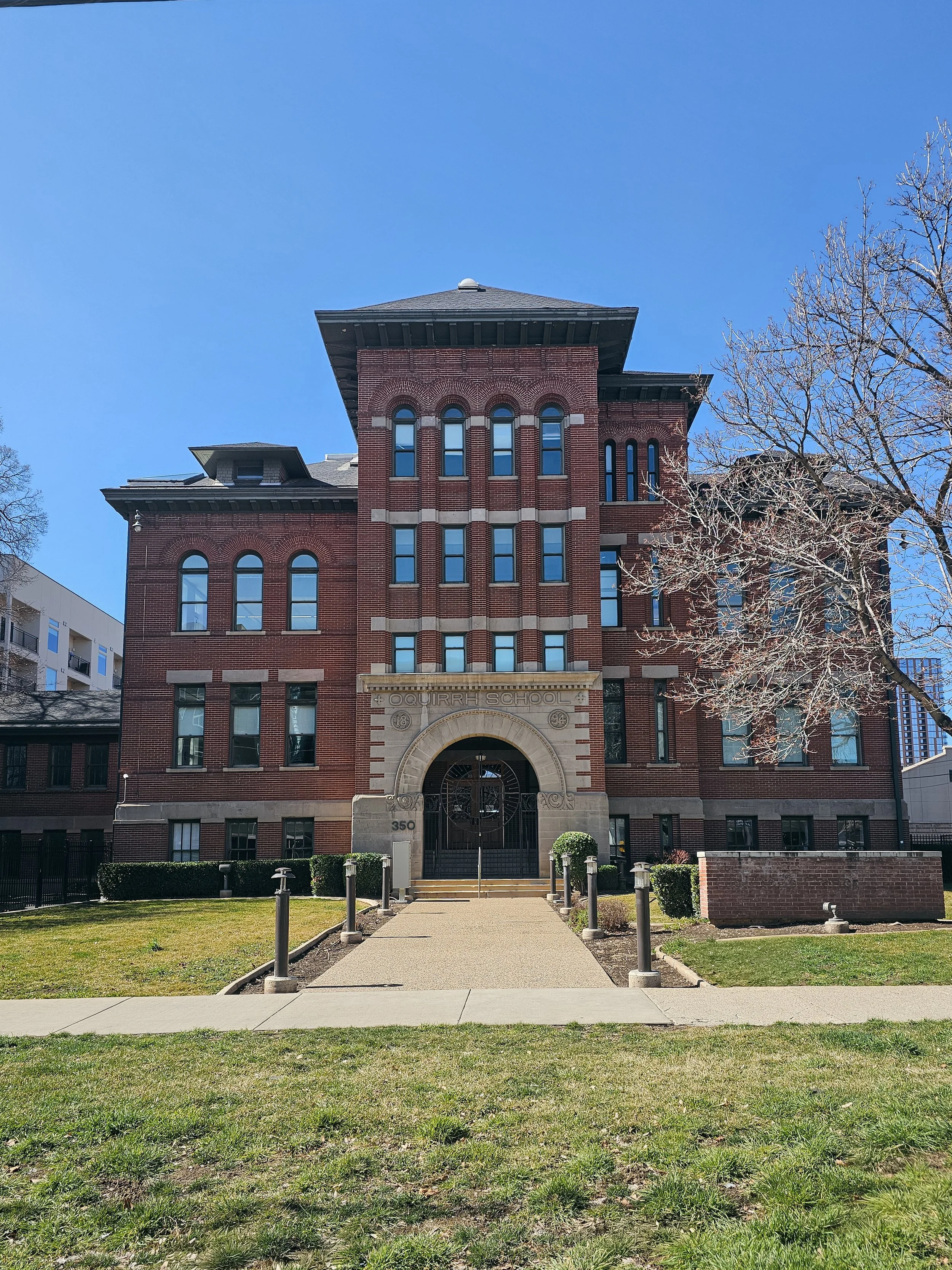
The result is a third-floor home in the historic Oquirrh School that does not look or feel like most mental health treatment centers. It is large enough to hold the full range of what we do, and designed carefully enough that every part of it is communicating something before anyone says a word.
Your nervous system reads a room before your conscious mind does. That’s why the spaces therapy is delivered in matter so much.
our building
We are on the third floor of the Oquirrh School, a historic building at 350 S 400 E in Salt Lake City's Central City neighborhood. The building has been part of this community for over a century. There is something fitting about doing this work in a place with that kind of permanence. You arrive, you climb the stairs, and by the time you reach the third floor something has already begun to settle. The walk (or elevator ride) up to the third floor is part of the transition. You are leaving something behind. By the time you reach our door, you have already moved from the street to somewhere quieter. That threshold is intentional. Healing needs a container, and the container begins here.
our group and training room
The circle is not decorative. It is a clinical decision. When everyone in a room can see everyone else, when there is no front and no back, no hierarchy built into the furniture, something changes in how people relate to one another. The circle is one of the oldest containers for human meaning-making, and it remains one of the most powerful. This is where our group work happens, where psychodrama unfolds, where the IOP gathers each week. The room is arranged this way because the arrangement matters.
The windows were one of the first things we noticed about this space. The quality of light that comes through arched windows at this height is different from what you find in most clinical settings. It is warm and directional and changes through the day. Light is one of the things the nervous system uses to orient itself in space and time. These windows do that work quietly, before any clinical work begins.
We thought carefully about what belongs in this room. Not because the aesthetics are the point, but because every object in a clinical space communicates something to the people who enter it. Whether this is a place that sees them as whole people or as cases to be processed. The details are our answer to that question.
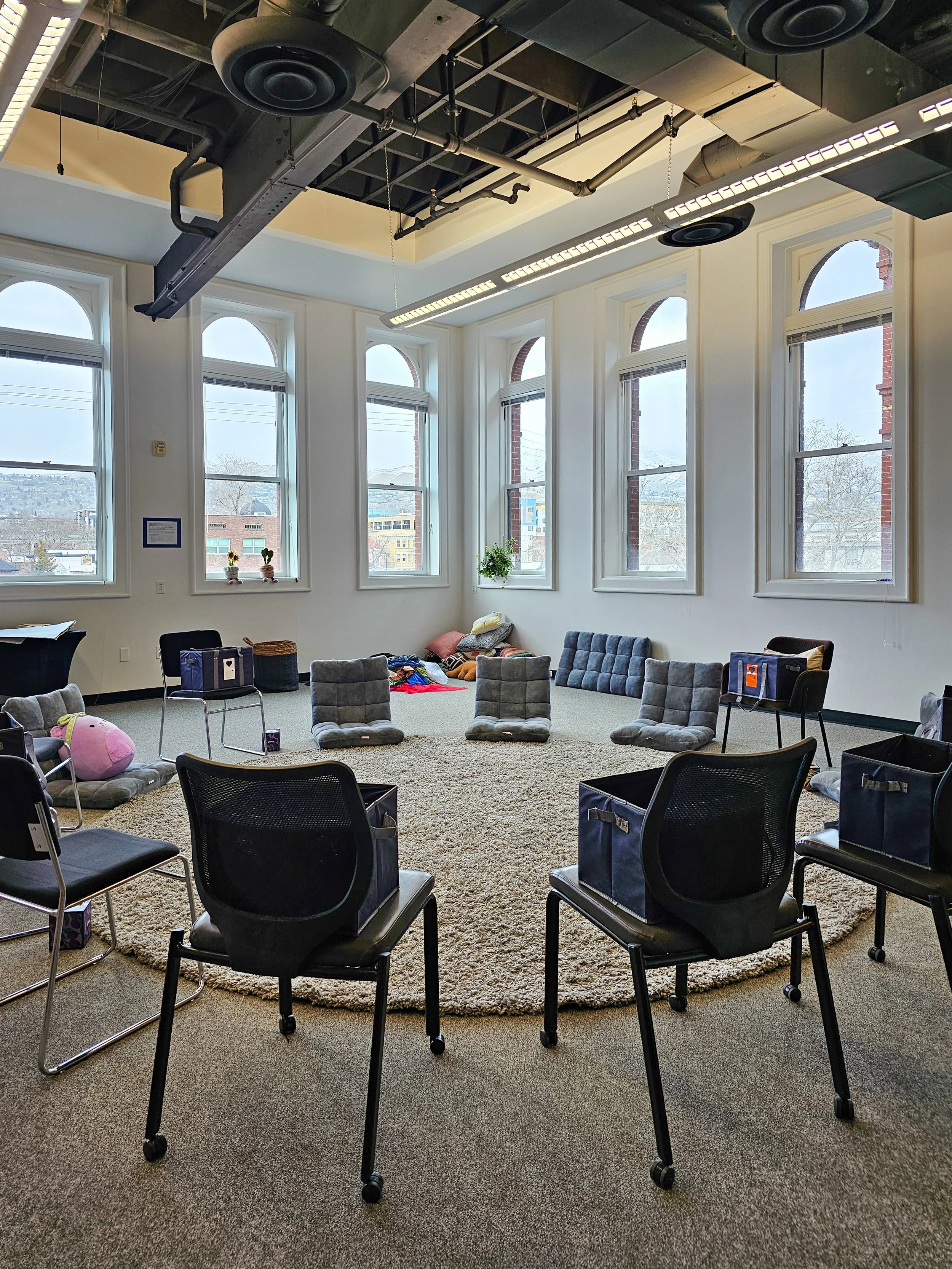
This room holds different things at different times. Professional training and continuing education for clinicians. Community groups. Specialty workshops. It is configured and reconfigured based on what the work requires. Flexibility is part of how we think about space: the room serves the purpose, not the other way around.
plan your visit
Hearten House is located at 350 S 400 E, third floor of the historic Oquirrh School, in downtown Salt Lake City's Central City neighborhood. The building is fully ADA accessible with elevator access to the third floor.
We are accessible by TRAX and UTA bus. Street parking is available on 400 E and surrounding streets.
If you are coming for a first appointment or a consultation, you will receive arrival instructions from our admissions team ahead of time. If you are simply curious about the space, reach out through our contact page and we will be glad to arrange a time.