sandtray THERapy
When words are not enough, figures help create a picture.
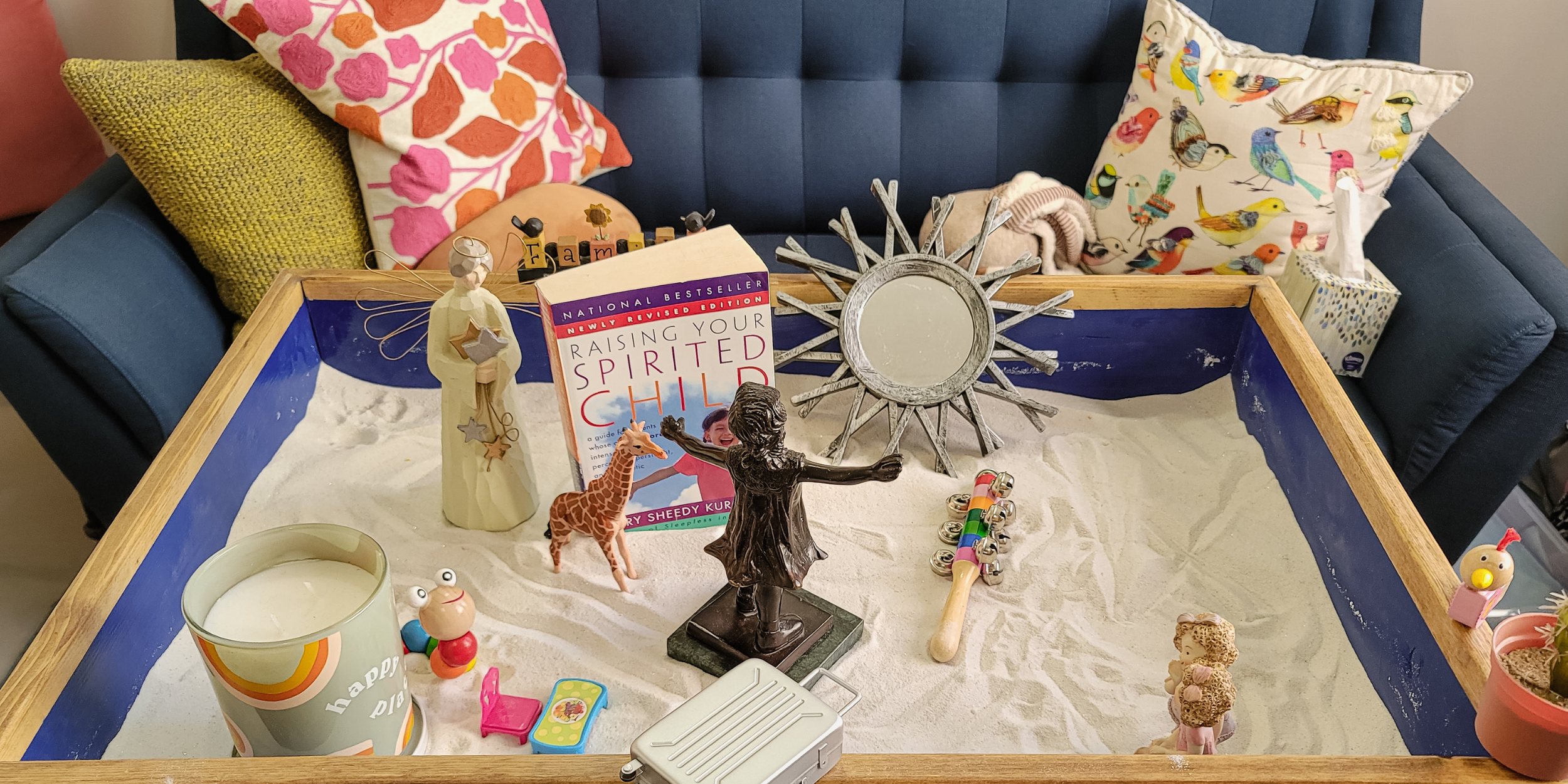
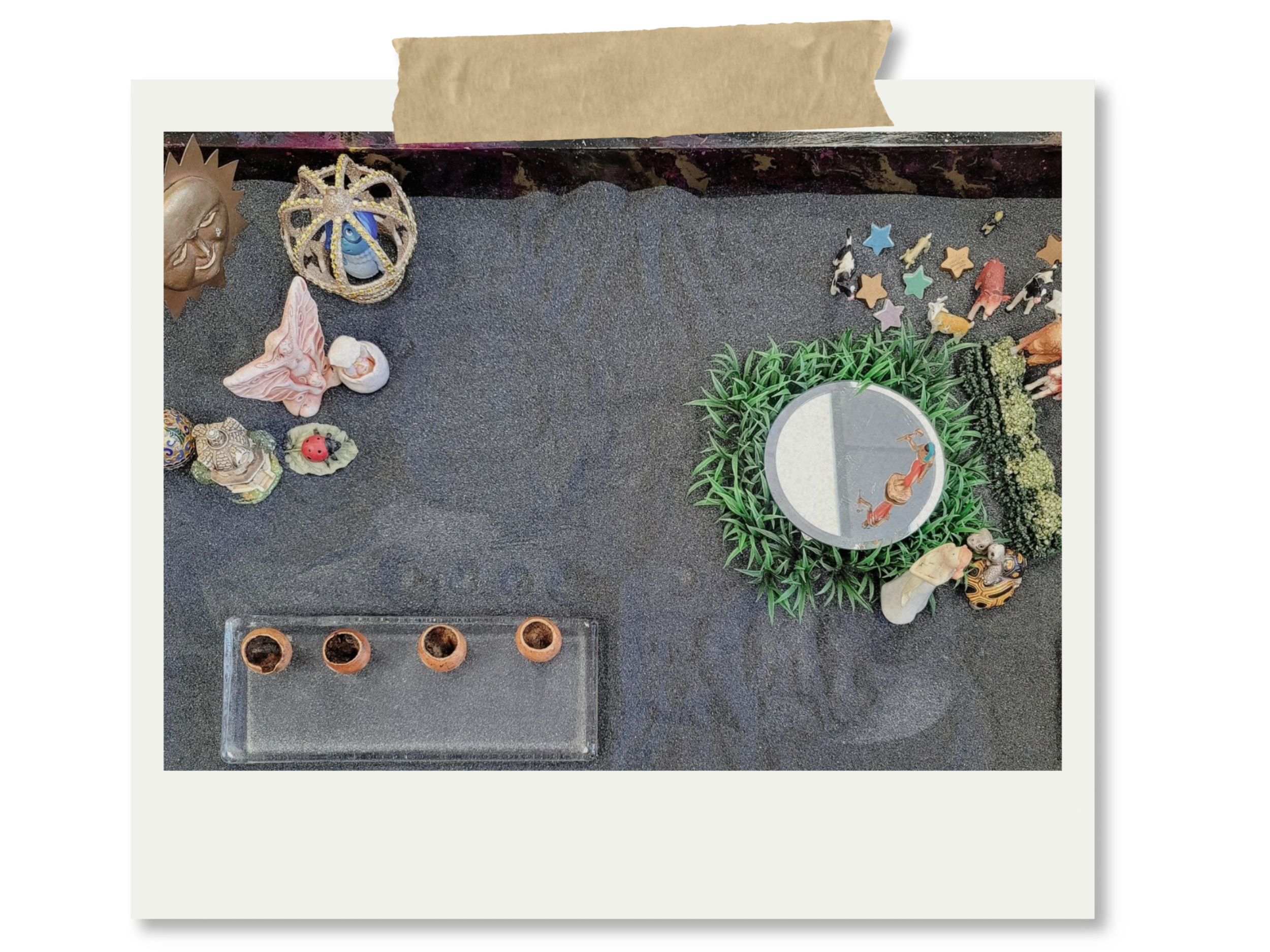
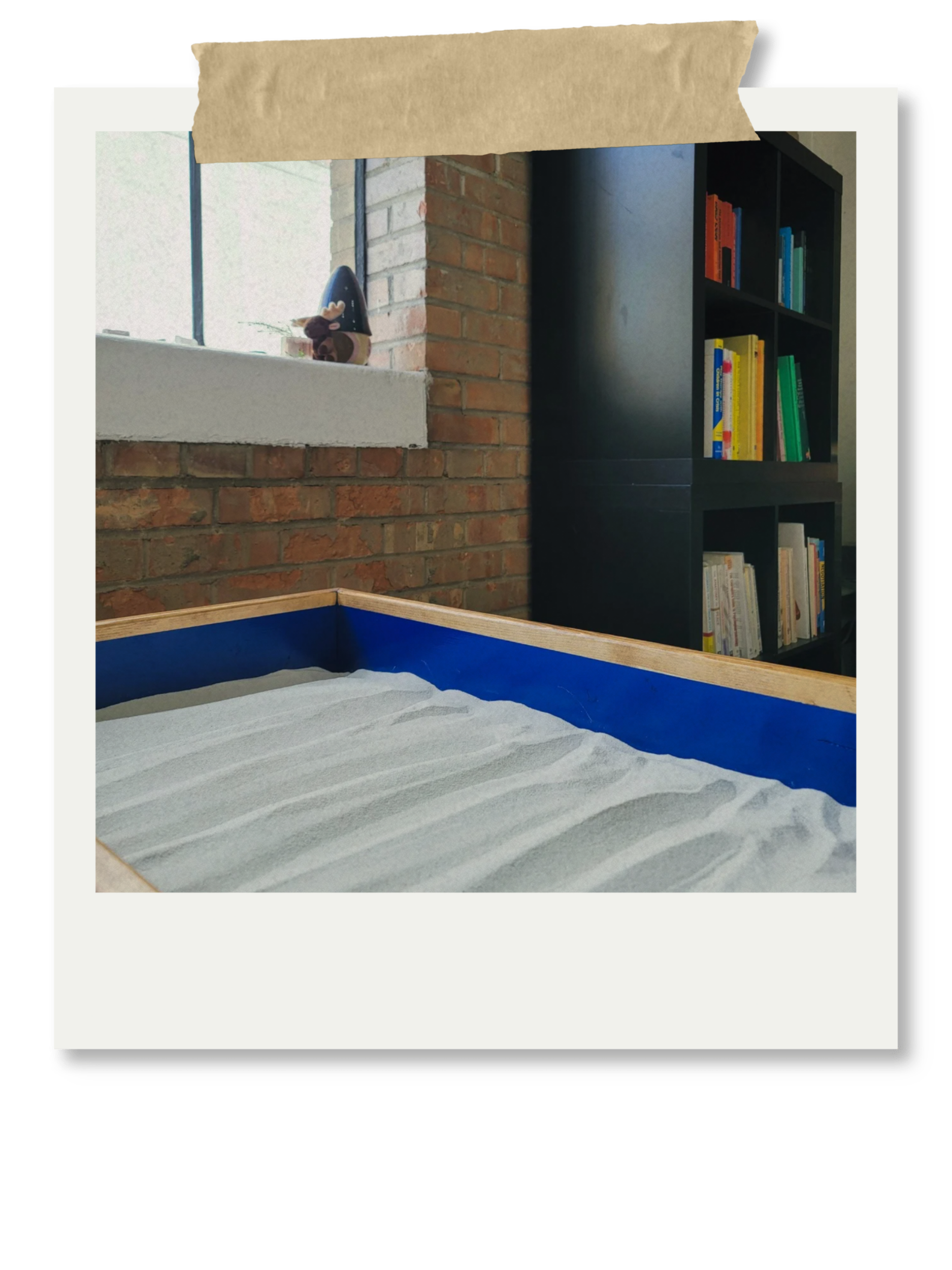
There is a tray of sand on a shelf in our therapy room. Beside it, hundreds of small figures: people, animals, buildings, vehicles, mythological creatures, objects from nature, things that are hard to name. You can pick up whatever you are drawn to. Arrange them in the sand. Build something.
Nobody tells you what it means. Nobody interprets it for you. You just build. And then you look at what you built. And something you could not have put into words becomes visible.
That is sandtray therapy. And it is more powerful than it sounds.
What Sandtray Therapy Is
Sandtray therapy is an expressive therapeutic method in which a person uses miniature figures and a tray of sand to create three-dimensional scenes. It was developed by Dora Kalff, a Swiss therapist who built on the work of Carl Jung and the play therapy tradition of Margaret Lowenfeld.
The underlying idea is that the psyche communicates in images and symbols, not only in words. When you build a world in the sand, you are giving form to something that lives in you, something that may not yet have language, or that loses something essential when it is translated into language. The sand tray becomes a container for what is hard to hold otherwise.
Sandtray therapy is not just for children. It is used extensively with adults, particularly adults navigating trauma, grief, identity questions, relational difficulties, and experiences that resist verbal articulation. Some of the most profound work in a sandtray session happens in complete silence.
The figures in the sand tray give form to what lives inside you. Once you can see it, insight and change become possible when they might not have felt possible before.
What a Sandtray Session Looks Like
Your clinician will invite you to work with the sand tray. You might be given a specific prompt, or simply invited to build whatever comes. You choose figures from the collection, place them in the sand, move them, add to the scene, remove things. The process is intuitive. You follow what draws you.
When you feel complete, you look at what you have created. Your clinician may ask a few open questions: what do you notice? Is there anything that surprises you? What is the relationship between these figures? The questions are not interpretations. They are invitations to look more closely at what you already made.
What people discover in a sandtray is often surprising. Patterns they did not know they were carrying. Relationships between parts of their experience they had not consciously connected. Feelings that had no words suddenly have a shape. The scene in the tray becomes a map of something internal, and once it is visible, it becomes workable.
What Sandtray Can Reach
Sandtray therapy is particularly well suited for experiences that happened before language developed, for trauma that lives in the body and in image rather than in story, and for people who feel constricted or self-conscious in verbal therapy. It is also powerful for children and adolescents, who often communicate more naturally through play and image than through direct conversation.
In adults, sandtray can open material that years of talk therapy has not been able to reach. This is not because talk therapy failed. It is because some experiences are stored in a part of the brain that language does not easily access. The image, the symbol, the three-dimensional scene, these speak a different language. And sometimes that language gets much closer to what is true.
Sandtray Therapy at Hearten House
Sandtray is available in individual therapy at Hearten House and can be integrated into intensive formats. It is one of the expressive tools within our broader experiential model, often used in combination with other approaches. A person might use the sand tray to externalize something, and then bring what emerged into a psychodramatic scene. The methods speak to each other.
You do not need to know anything about sandtray therapy to benefit from it. You do not need to be artistic or imaginative in any particular way. You just need to be willing to pick up a figure and see what happens next.
Frequently Asked Questions about sandtray therapy
-
Sandtray therapy is an expressive therapeutic method in which a person uses miniature figures and a tray of sand to create three-dimensional scenes that give form to their inner experience. It was developed by Dora Kalff and draws on Jungian and play therapy traditions. Sandtray is used to access and process experiences that may not be easily expressed in words.
-
No. Sandtray therapy is used extensively with adults and is particularly effective for adults navigating trauma, grief, identity questions, and experiences that resist verbal articulation. Some of the most profound sandtray work happens with adult clients who have tried many forms of talk therapy without finding adequate relief.
-
You are invited to choose miniature figures from a collection and place them in a tray of sand, building whatever feels right. The process is intuitive and not directed. When you feel complete, you look at what you have created. Your clinician may ask a few open questions to help you explore what the scene reveals. There is no right way to do it.
-
No. Your clinician will not offer interpretations of your scene and you are not expected to explain or analyze what you built. Open questions may help you look more closely at what is already there, but the meaning emerges from your own exploration, not from someone else's reading of it.
-
Sandtray therapy is particularly useful for trauma that lives in image and sensation rather than story, for experiences that happened before language developed, and for people who feel constricted in verbal therapy. It is also effective for grief, identity exploration, relational difficulties, and any experience that seems to resist being put into words.
-
Yes. Sandtray therapy is available in individual therapy and intensive formats at Hearten House. It integrates wonderfully with psychodrama and other parts of our experiential and trauma-informed clinical model.
not sure where to start?
A free consultation is a conversation, not a commitment. We will help you understand what kind of support makes sense for where you are, and whether Hearten House is the right fit.