Mental health and trauma-focused IOP in Salt Lake City.
If you’ve been searching for an intensive outpatient program built around mental health and trauma (not substance use), you’ve found it.
Hearten House is Salt Lake City’s only fully experiential outpatient mental health treatment center. Our IOP is built on an embodied, action-oriented clinical model that works with your nervous system, your relationships, and your story, and goes far beyond just being able to name and understand what’s wrong.
Hearten House’s Intensive Outpatient Program At-a-glance
Who it's for
Adults 18+ navigating mental health challenges, trauma, or both. No substance use diagnosis required.
Schedule
3 to 5 days per week, 9 to 18 hours per week depending on your treatment plan
Start day
Mondays
Location
350 S 400 E, on the third floor of the historic Oquirrh School in downtown Salt Lake City, Utah
Insurance
Most major insurance plans accepted, including Medicaid. We verify benefits before you commit.
First step
A confidential conversation with our admissions team
You're ready for more than weekly therapy allows.
Maybe you’ve been in therapy for a while and something still isn’t moving. You’re functioning, and insight isn’t the problem. Integration is. You need more time in the work each week, more support, more structure than a single hour can hold.
Or maybe you’ve been searching for mental health IOP in Salt Lake City and keep finding programs built around substance use. Your struggles are with mental health and trauma, and you need a program built for exactly that.
Either way, you’re in the right place.
Our IOP is designed for adults 18 and older navigating depression, anxiety, trauma, PTSD, relational difficulties, grief, life transitions, or other mental health challenges. You don’t need a substance use diagnosis to be here.
IOP that works with your whole self, not just your diagnosis.
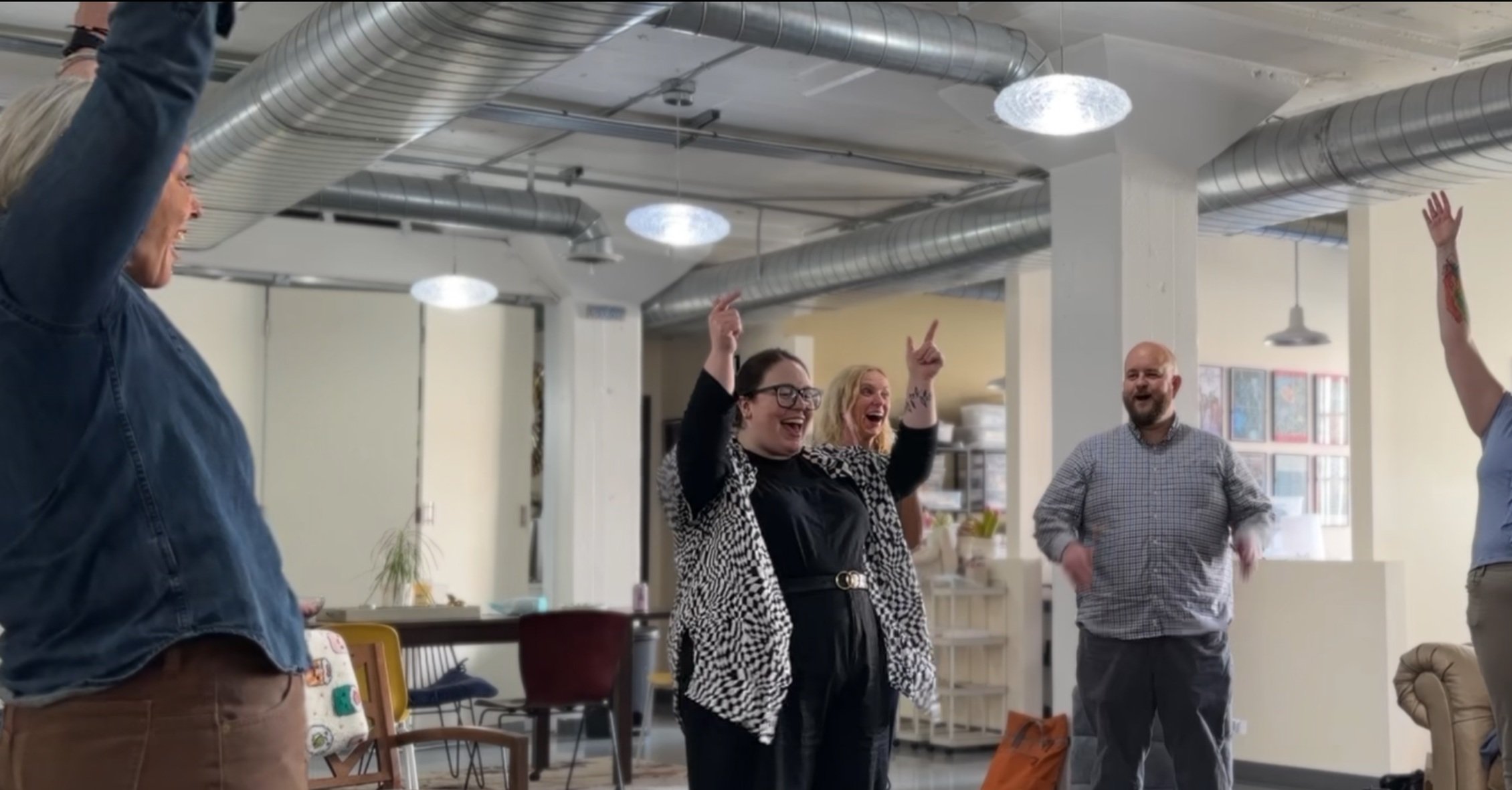
Every group at Hearten House is experiential. That’s not an add-on or a specialty track; it’s the clinical model. You’ll use action-based methods, structured exercises, creative approaches, and psychodrama-informed tools because that’s how we work.
The work engages your nervous system and your relationships, not just your capacity to articulate what’s wrong. For many people, this moves things that years of talk therapy couldn’t.
The program is also structured so you always know what to expect. We use repeatable group structures with clear purposes and predictable rhythms, not because it’s administrative, but because predictability is part of trauma-informed care. When your nervous system knows what’s coming, it can settle into the work.

A week that builds on itself.
IOP at Hearten House runs 3 to 5 days per week, 9 to 18 hours per week. Your specific schedule is determined during intake based on your treatment plan and insurance requirements.
Each week follows a structured rhythm of group types: process group, psychoeducation, skills practice, group psychotherapy, specialty groups, and support groups. These aren’t interchangeable. Each has a distinct purpose, and together they create a week that builds on itself.
Groups begin on Mondays. Your first week includes an orientation so you know exactly what to expect before you walk into your first group.
We also take your basic needs seriously. Snacks and beverages are provided. You’re welcome to bring your own lunch (there’s a fridge and a microwave). This sounds like a small thing. It isn’t. Your body is part of your healing.

mental health Treatment moves at the pace of safety.
Phase 1 Safety, Resourcing, and Connection
The beginning of IOP is focused on building safety, making connections, and identifying your strengths and resources.
You won’t be asked to share your trauma history with a group of people you barely know. We don’t require trauma timelines, autobiographies, or diagnostic history presentations in group. If you choose to share something, you share it in your own time. This phase isn’t a waiting room for the real work. It is the real work.
Phase 2 Deeper Processing — With Choice
As you build more capacity, resources, and support, the work can go deeper. This phase focuses on insight, regulation, relational repair, and integration.
You still won’t be forced to tell the story of your trauma or relive it. The experiential work here is designed to support movement and healing, not re-traumatization. Choice and consent are present throughout.
Phase 3 Integration and What Comes Next
Later in your program, the focus shifts to practicing skills in real life, strengthening your supports, and planning what comes after IOP.
Discharge planning begins at admission, not because we’re rushing you out, but because planning ahead is part of safety. Stepping down gradually is part of the process.


How the Admissions Process Works:Reach Out
Send us a message, call, or fill out the inquiry form. Someone from our admissions team will respond within one business day. This first conversation is just that, a conversation. We want to understand what you’re looking for and whether IOP at Hearten House is the right fit.
Screening
Before we schedule anything, we do a brief screening to make sure IOP is the right level of care for where you are. If it’s not, we’ll help you find what is.
Benefits verification
We verify your insurance benefits before you commit to anything. You’ll know what to expect financially before you move forward, not after.
Assessment
You’ll complete a comprehensive biopsychosocial assessment with one of our clinicians. This is where we get to know you, not just your diagnosis, but your history, your strengths, and your goals. We use this to build your treatment plan.
Orientation
Before your first group, you’ll have an orientation appointment. You’ll know what to expect, what the groups are for, and what the first week looks like.
Start on Monday
IOP participants begin on Mondays. By the time you walk into your first group, you’ll know exactly where you are and what comes next.
We accept most major insurance plans, including Medicaid. Before you commit to anything, we verify your benefits and walk you through what your financial responsibility will look like.
Insurance typically requires attendance of at least 9 hours per week across at least 3 days. We’ll review your specific plan requirements during intake so you can plan accordingly.
If you’re uninsured or underinsured, ask us about our sliding scale pathway. Cost shouldn’t be the reason someone doesn’t get the support they need.
Insurance and cost
your frequently asked questions about IOP, answered
-
An IOP is a structured level of mental health treatment that provides more support than weekly therapy without requiring you to live in a facility. At Hearten House, IOP participants attend 3 to 5 days per week for 9 to 18 hours of programming weekly, while continuing to live at home and maintain daily responsibilities.
-
Yes. Hearten House offers a mental health and trauma-focused IOP in downtown Salt Lake City. We don’t require a substance use diagnosis. We specialize in mental health and trauma treatment using an experiential, embodied clinical model.
-
Hearten House is the only fully experiential outpatient mental health treatment center in Salt Lake City. Every group in our IOP uses action-based, embodied, and psychodrama-informed methods, not just talk-based psychoeducation. We’re also mental health and trauma primary, meaning no substance use diagnosis is required for admission.
-
Yes. Hearten House accepts Medicaid as well as most major insurance plans. We verify your benefits before you commit so you know what to expect financially.
-
IOP might be the right fit if weekly therapy hasn’t been providing enough support, if you’re going through a period that requires more structure and time in treatment, or if you’re stepping down from a higher level of care. Our admissions team will help you figure out the right level of care during your first conversation, and if IOP isn’t the right fit, we’ll help you find what is.
-
No. You won’t be asked to share your trauma history with a group of people you barely know. The first phase of treatment is focused on building safety and connection. If and when you choose to share, you do so on your own timeline. Our model is designed to avoid re-traumatization.
-
Hearten House is located at 350 S 400 E, third floor of the historic Oquirrh School, in downtown Salt Lake City.
-
New participants begin on Mondays. Before your first group, you’ll complete an intake assessment and an orientation appointment so you know exactly what to expect.
-
Experiential IOP uses action-based, embodied, and creative therapeutic methods rather than relying solely on talk therapy. At Hearten House, this includes psychodrama-informed tools, structured group exercises, creative expression, and somatic approaches. The goal is to engage your nervous system and your relationships, not just your insight, in the healing process.